Choosing a wedding venue is really about whether the room supports your day’s rhythm. Ballroom at the Ben is built for that kind of “event momentum”: an ornate ballroom experience anchored in Center City, just steps from City Hall, and managed through Finley Catering.
Below is a venue-planning guide focused on the details couples and planners should verify early—especially around capacity, layout flow, and vendor coordination—so your tour answers match your guest list reality.
What Ballroom at the Ben’s space is designed to deliver
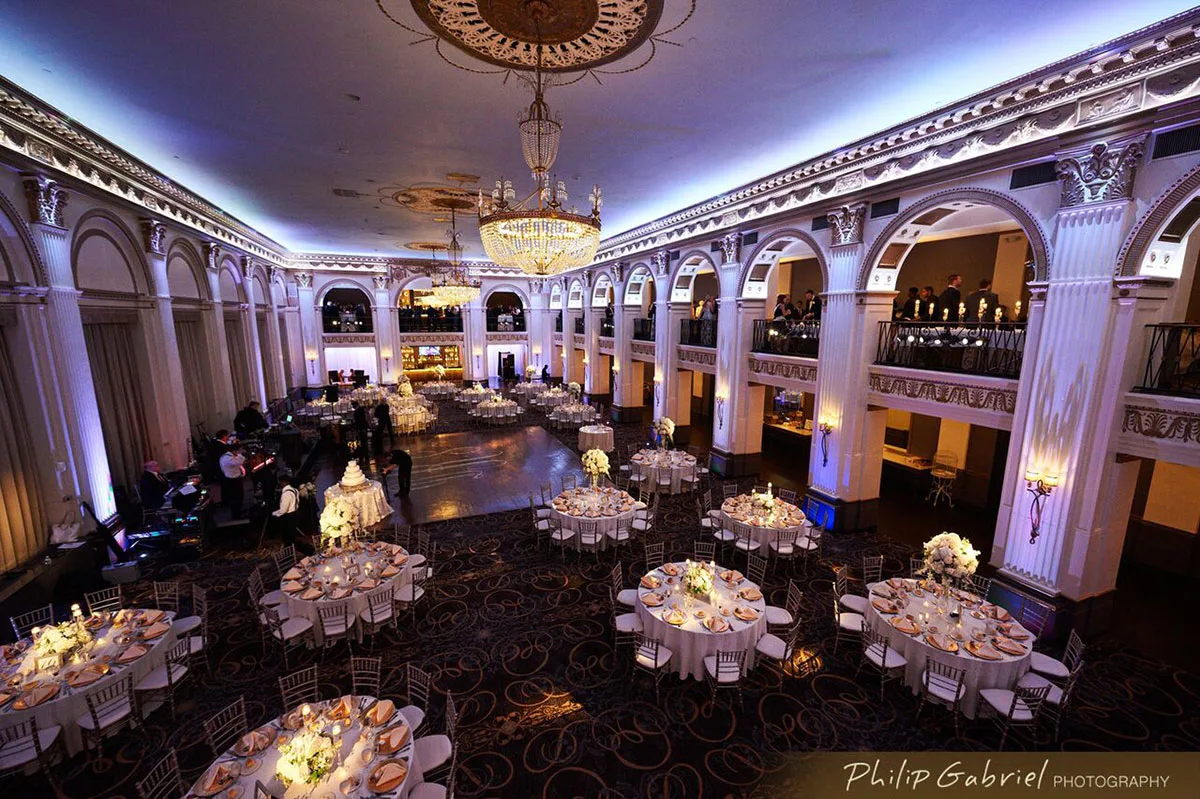
Finley Catering describes the Ballroom at the Ben as one of Philadelphia’s most distinguished event spaces, highlighting features like ornate ceilings and grand chandeliers. In practical terms, that means your ceremony-to-reception transition should be planned around a formal, chandelier-forward look—great for classic photography, but also something to consider for sightlines and stage placement.
A Center City location that changes your logistics
The official venue page places the ballroom at 834 Chestnut Street, Philadelphia, PA 19107 and notes it’s just steps from City Hall in the heart of Center City. For day-of planning, that typically means walkability for some guests, and tighter curb/traffic management than you’d see in suburban venues. Confirm how guest arrivals are handled and where your vendors stage so you can keep the timeline smooth.
Capacity range: plan your guest list conversation like a coordinator
Finley Catering lists a minimum capacity of 150 and a maximum of 385 for the Ballroom at the Ben (wedding/seated dinner). That’s a meaningful planning signal: if you’re in the lower end, ask how the room feels and how your seating will be laid out to avoid empty “dead zones.” If you’re closer to the maximum, focus on density planning—where you’ll place the band/DJ, the bar, and how guests move between course changes.
Seated dinner flow matters more than the number alone
Because the stated range is specifically tied to wedding/seated dinner, don’t assume cocktail-only events or reception layouts will be treated the same way. Ask for a sample floor plan style for your guest count (not just a generic diagram) so you can visualize your ceremony staging, head table placement, and circulation paths.
Catering and coordination: what’s “in-house” for this venue
Ballroom at the Ben is listed under Finley Catering venues. That matters for coordination because it signals how catering, menu timing, and event communication may be handled. On the Finley Catering contact page, couples can schedule a private tour by completing their form, and the main contact phone is +1 215-627-5100.
Use your tour to confirm vendor expectations
Even when a venue is partnered with a caterer, couples should still verify the workflow details that affect your timeline. During your visit, ask how external vendors (for example, your photographer timeline needs, AV/lighting support, and any special decor requirements) are scheduled relative to catering setup.
Parking and arrival planning to keep guests calm
Finley Catering’s venue page includes directions and a specific parking reference: 909 Sansom Street, Philadelphia, PA 19107. For planners, this is one of the most useful “day-of reality” details because it can influence when guests arrive, how late arrivals are managed, and how quickly the ceremony can start on time.
Decide your arrival strategy during the tour
Ask whether you’ll receive a recommended arrival window and how the venue handles peak traffic moments typical of Center City. If you’re building in a cocktail buffer, confirm whether the parking suggestion is sufficient for your expected timeline—or whether you’ll need an additional arrival plan for guests coming from other areas.
Two quick tour questions that prevent expensive surprises
To keep your decision grounded, bring questions that force specifics:
1) “How will you lay out the ballroom for a wedding/seated dinner at 150–200 guests versus 300–385 guests?” A real floor plan response makes the capacity range concrete.
2) “What is the day-of setup sequence—who arrives first, and where do vendors stage?” This is the fastest way to ensure your timeline reflects how the building and team actually work.
Is Ballroom at the Ben the right fit?
If you want a classic, chandelier-and-ornate-ceiling ballroom look in Center City—and you’re ready to treat capacity and logistics as a coordinated plan—Ballroom at the Ben can be a strong match. Start by confirming your seated-dinner layout for your exact guest count and clarifying parking and vendor staging during the tour. With those details pinned down, you can design a reception flow that feels as seamless as the room looks.