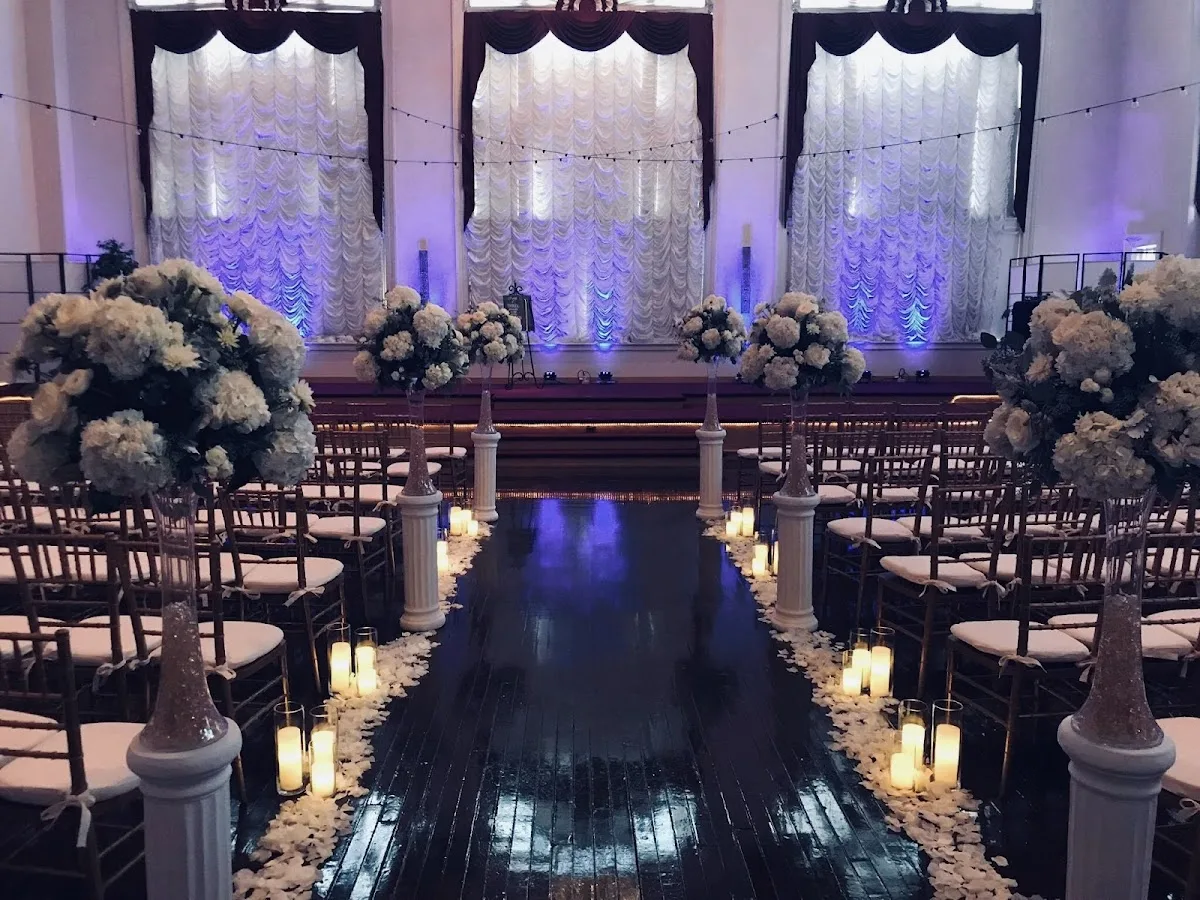
The Brickhouse RVA is a useful Richmond venue to study when a wedding needs personality without the scale of a sprawling event complex. At 406 W Broad St, the setting combines original brick, warm wood floors, neutral gray walls, and black iron railing. Those details create a strong visual starting point, but the more important planning question is how the room will work once a ceremony, meal, dancing, photography, and vendor setup all share the same event plan.
Original brick gives the reception design a built-in point of view
The venue’s industrial character can reduce the need for a heavily layered décor scheme. Original brick can provide texture behind a ceremony arrangement or sweetheart table, while warm wood floors bring visual warmth to a palette of gray, black, cream, or muted color. Couples should still tour with their actual design ideas in mind. Ask where a ceremony backdrop, bar, guest book, cake, and DJ or band could go, then look at the sightlines from guest tables rather than judging the room from one attractive corner.
This approach also helps separate “the venue looks right” from “the venue supports the intended celebration.” A design that photographs well may feel crowded if lounge furniture, a buffet, and a dance floor compete for the same central area. A simple scaled floor plan, even a preliminary one, can make that tension visible before deposits are committed.
Vendor setup deserves its own timeline conversation
The Brickhouse RVA’s official site says the space was built with events in mind and has room for vendors to set up and serve. It also states that tables and chairs are included in the rental. Those are meaningful planning signals, but they do not answer every logistics question. During a tour, couples should ask where deliveries arrive, whether setup and breakdown occur within the rental window, and how vendors move equipment from an arrival point into the event space.
Those answers affect more than the caterer. Florists need a place to stage arrangements, rental teams need a clear path for tables and specialty pieces, and entertainment vendors need to understand power access and load-in timing. Ask for the current rules in writing, including any requirements for outside catering, alcohol service, décor installation, candles, amplified music, and cleanup. The venue’s website provides a useful starting point; the proposal should provide the operational detail.
West Broad location changes the guest and photo plan
A venue at 406 West Broad Street places the wedding in Richmond’s urban West Broad setting rather than in a remote, self-contained property. That can suit couples who want the address to feel connected to the city, but the invitation and timeline should make arrival straightforward. Confirm the recommended parking options, accessibility route, rideshare drop-off point, and any building-entry details that guests should receive in advance. The listing identifies parking as an amenity, but couples should verify current arrangements and whether the available spaces meet the needs of older guests, vendors, or guests using mobility devices.
The address can also shape photography. Instead of treating portraits as an afterthought, ask the photographer to identify interior textures and nearby approved locations that fit the schedule. A short portrait plan can preserve cocktail-hour time and prevent the couple or wedding party from wandering away from the venue without a clear return point.
Leadership experience is a planning asset to define clearly
The official site identifies co-owners Marylee Marmer and Andrew Melton and says they have collaborated since 2017. It also notes that Marmer has operated Marylee Marmer Events since 2015, with more than 20 years in the business and more than 1,000 planned events. These are specific background details worth discussing on a tour, especially for couples who want a venue team that understands event flow.
Experience, however, should translate into a defined responsibility list. Ask who will be the point person on the wedding day, which tasks belong to venue staff, and who coordinates the handoff among the couple, caterer, planner, and rental company. A strong conversation should cover the ceremony transition, vendor arrival, final guest departure, and the process for handling timeline changes.
Use the tour to test fit, not just atmosphere
The Brickhouse RVA is shown in current listing data with a 5.0 rating from 22 reviewers, but reviews should support—not replace—the couple’s own evaluation. Bring a guest estimate, a draft floor plan, and a list of must-have vendors to the tour. Confirm capacity, pricing, availability, included furniture, parking, accessibility, catering and alcohol rules, insurance requirements, and cancellation terms directly before booking. With those answers beside the venue’s distinctive industrial materials and West Broad address, couples can decide whether the space fits both the wedding’s visual language and its practical rhythm.