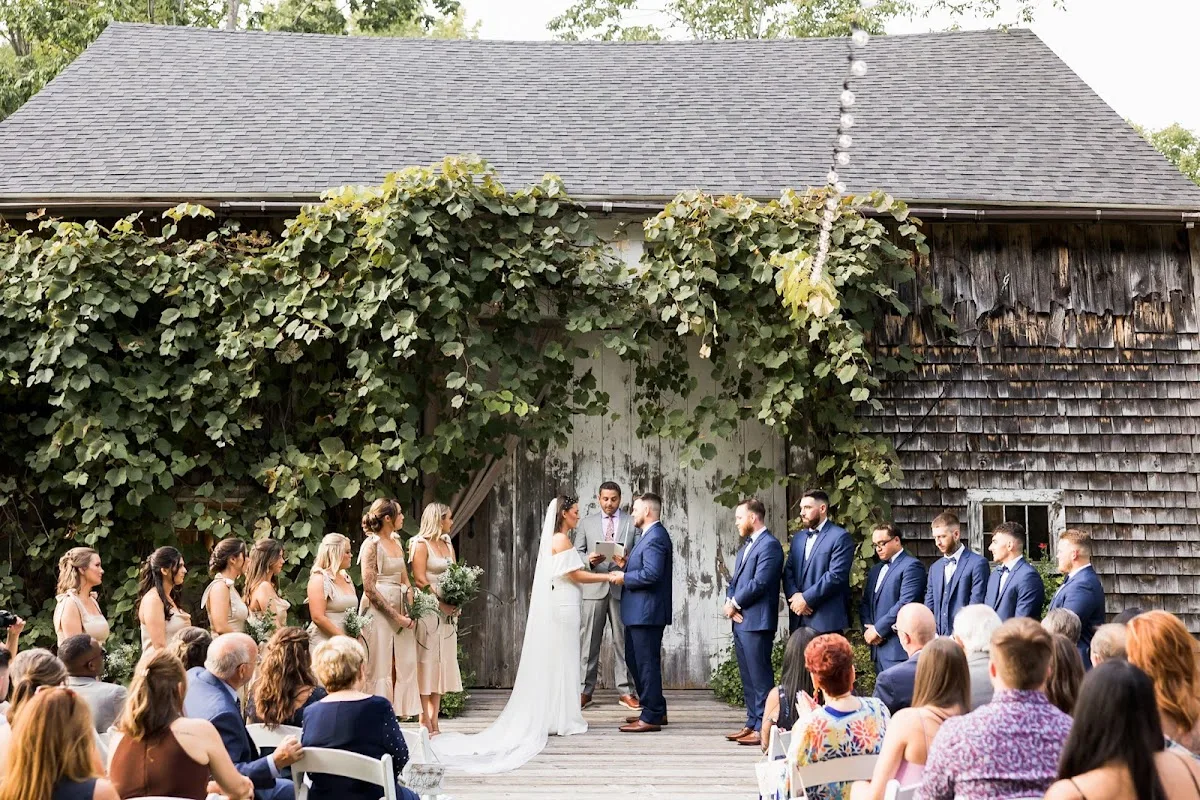
Choosing a venue is really a production decision: can your ceremony sightlines, cocktail mingling, and dinner setup all work inside the same physical “machine”? Halo at the Point (Portland, Maine) is an industrial, open-concept wedding venue within Thompson’s Point that’s designed for modern events—so the right questions aren’t about whether it photographs well, but whether it can run smoothly on your timeline.
Here’s a venue-planning guide focused on the details most couples only discover once they start mapping their vendors and logistics.
What the space is actually built to do (and why it matters for your day)
Halo at the Point is described as a 6,800 square foot open concept event venue in the Brick North building at Thompson’s Point. The official site also highlights exposed brick and classic 1800’s industrial architecture, paired with modern audio and lighting amenities. In practice, that combination usually means you’re planning for a flexible floor plan: more “event zones” and fewer rigid walls guiding your day.
For wedding planning, that matters because your timeline depends on transitions: where your ceremony staging happens, how guests move during cocktail time, and how your reception layout resets for dinner and dancing.
Ceremony-to-reception flow: map your sightlines before you pick your layout
Because Halo at the Point is open-concept, you’ll want to decide early how you’ll separate moments without creating dead zones. A common strategy is to treat the venue as three zones—ceremony sightlines, cocktail mingling, and dinner performance—then assign each vendor the equipment and space they need to do their job without blocking the next moment.
Start your tour with a “movement walk”: stand where the officiant will be, then step through the route guests will take to cocktail. Ask your planner and photographer to test viewpoints in real time (not just in photos) so you can see whether your ceremony backdrop competes with reception lighting or whether a bar/food line creates a bottleneck.
Audio and lighting readiness: plan your tech conversation like a vendor
The venue’s official description specifically mentions industry standard audio and lighting alongside modern amenities. That’s a strong signal for couples who want amplified sound, live music, or a DJ setup that doesn’t require improvisation. Still, you should confirm details like input types, speaker placement options, and how lighting cues will be handled for speeches and first dances.
Instead of asking only “Do you have sound?” bring a simple diagram: where your microphones need to be, where your DJ/live performer will stand, and where your dance floor will go. Then ask the venue team how they typically wire and position equipment so it aligns with that layout.
Questions that prevent day-of surprises
When you meet the venue or tour team, be ready to ask what their “standard” looks like versus what requires extra coordination. For example: how they support setup for audio/video and photography sessions, whether load-in and power access are straightforward for your specific vendors, and what the coordination process looks like if you’re bringing additional equipment.
Neighborhood and access: use the address to align arrival, parking, and vendor load-in
For planning, lock down the logistics reference point. Halo at the Point lists an address of 20 Van Aken Wy, Portland, ME 04102 and a contact number of +1 207-747-5288. Use that as your anchor for arrival timing, ride-share drop-off guidance, and where your vendors will realistically enter and stage their gear.
Also, ask how arrival patterns change during event days at Thompson’s Point. Even when venues are close together, vendor access can be different from guest access—so confirm load-in windows and the practical “path” your team will take from vehicle to setup area.
Make your tour more useful: bring a 15-minute plan, not a wish list
If you want your tour to feel decisive, arrive with a short plan: your estimated guest flow, your ceremony staging idea, and your reception zones. Then confirm three things on the spot: (1) how the venue team expects the space to be partitioned during different wedding moments, (2) what their audio/lighting setup typically supports for weddings, and (3) how vendors should coordinate load-in for a smooth schedule.
Halo at the Point is positioned as an industrial space that can handle weddings and more—so the best outcome is when your vendors and timeline are designed to match that open-concept reality.