Bolling Haxall House presents a different planning question from a blank event hall: how can a couple use a distinctive Richmond setting while making the practical parts of the wedding easy for guests and vendors? The venue is listed at 211 E Franklin St, Richmond, VA 23219, United States, and its Ballroom & Banquet classification points toward formal ceremony and reception planning rather than a casual drop-in gathering. The property should be assessed through both lenses—the character couples notice first and the operational details that determine whether the day will run comfortably.
The historic setting should influence the design plan
A venue with a recognizable identity can reduce the need to invent a theme from scratch. Couples can begin their tour by deciding which existing architectural qualities they want to feature and which areas need a lighter touch. That conversation affects floral scale, ceremony placement, table styling, signage, and the visual transition from ceremony to reception. Rather than asking only whether the space looks beautiful in photographs, ask where the visual focus naturally falls and whether that focus works with the planned vows, head table, dance floor, and guest tables.
The most useful design discussion is specific. Ask which areas are included in the event rental, whether furniture can be rearranged, what may be attached to walls or ceilings, and how much time is available for setup and breakdown. Those answers will show whether the desired look is built into the room or depends on additional rentals and labor.
Ballroom and banquet planning starts with the real floor plan
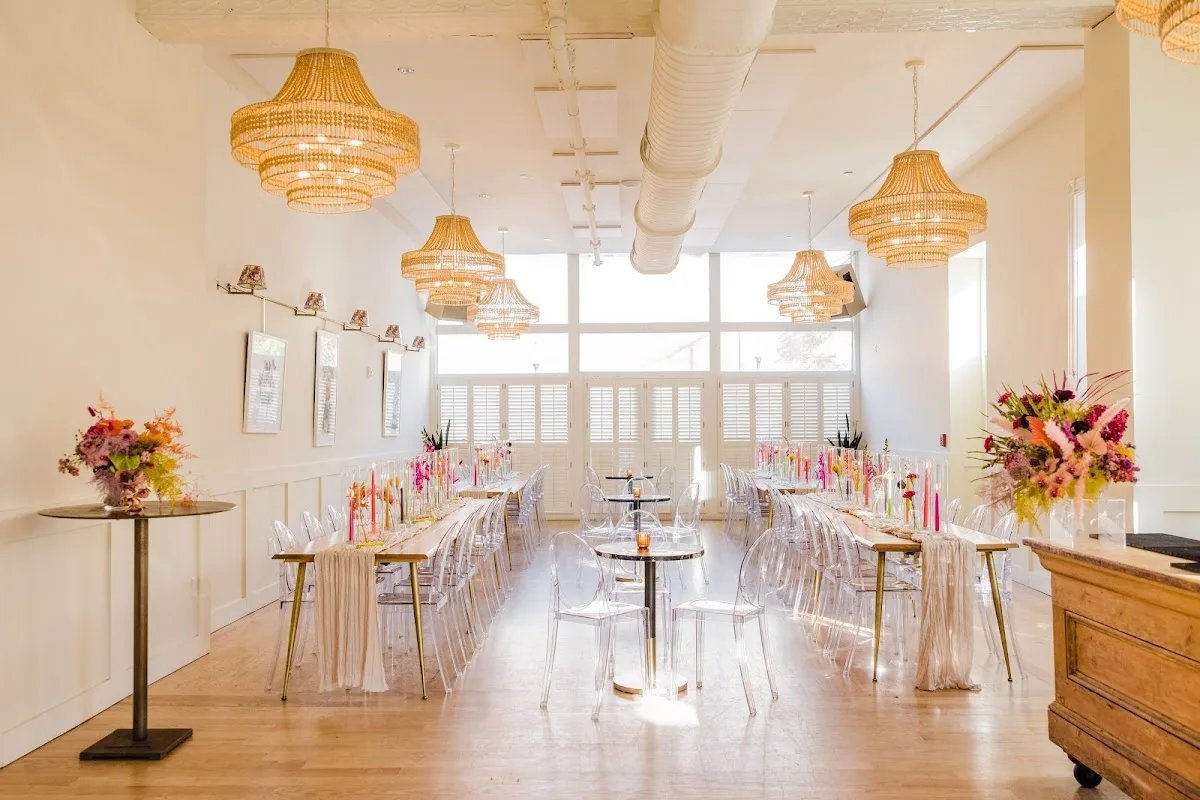
“Ballroom & Banquet” is a useful starting label, not a seating plan. A couple should compare the venue’s current capacity information with the actual guest list and reception format. A seated dinner, cocktail hour, buffet, band, DJ, dance floor, lounge area, and accessibility routes all compete for space. Request a floor plan that shows doors, restrooms, service areas, exits, and any fixed architectural features before making a layout decision.
It is also worth testing two versions of the room: the ceremony-to-reception conversion and the reception-only arrangement. If guests remain onsite while staff reset the room, the venue should explain where that transition happens and how long it normally takes. If a separate ceremony location is preferred, confirm the walking route and the plan for guests who need an easier path.
Richmond access belongs in the guest experience
The address at 211 E Franklin St places the venue in a central Richmond context, so transportation and arrival deserve attention during the tour. The listing identifies parking as an amenity, but couples should still ask what parking is available for the wedding date, whether it is shared, and how guests will find the correct entrance. The same conversation should cover rideshare drop-off, vendor loading, rain plans, and any timing restrictions for deliveries.
Accessibility should be reviewed in person rather than assumed from a listing. Walk the route from arrival to ceremony, reception, and restrooms. Confirm the path for mobility devices, the location of accessible entrances, and whether older guests or anyone recovering from an injury will encounter stairs or long distances. A clear arrival plan can prevent small logistical issues from becoming guest-facing problems.
Food, beverage, and vendor responsibilities need written answers
The current listing mentions a restaurant, but that label does not by itself define wedding catering. Ask whether food and beverage service is handled onsite, coordinated through approved vendors, or arranged another way for private events. Request the current menu process, service style options, bar rules, staffing responsibilities, cake procedures, and cleanup expectations in writing. Pricing is not shown in the available information, so couples should request a current quote rather than rely on a general price assumption.
Vendor coordination deserves equal precision. Confirm when the planner, caterer, florist, photographer, entertainment team, and rental company may arrive; where they may stage equipment; and who is responsible for the final timeline. Ask whether outside vendors are permitted and whether insurance, certificates, deposits, or other documents are required. These details can materially change the total scope of a wedding even when the venue itself appears to fit.
A strong tour ends with a clear confirmation list
Bolling Haxall House is listed with a 4.9 rating from 503 reviewers, a useful signal that can encourage a closer look but not replace a venue-specific conversation. Couples should ask for current capacity, available dates, rental inclusions, setup and breakdown windows, cancellation terms, payment schedule, accessibility arrangements, parking guidance, and the person who will manage event-day decisions. The listing provides the phone number +1 804-643-2847 and the website https://twcrichmond.org/ for checking current service, pricing, and scheduling information.
The best fit will be the one whose atmosphere and operating terms support the same wedding vision. A careful review of the floor plan, arrival route, vendor rules, and catering scope lets couples judge Bolling Haxall House on evidence instead of appearance alone—and gives the planning team a more dependable foundation for the next conversation.